
AI Overviews vs AI Mode: Key Differences Explained
AI Overviews vs AI Mode: learn how Google's two AI search experiences differ, what each means for your traffic, and how to get cited in both.

The difference between AI Overviews and AI Mode is not a naming detail. One is a summary box that appears above your organic results and can quietly answer the question your page was written for; the other is a conversational search surface where people keep asking follow-ups and your brand may never be mentioned at all. Both draw on Google's systems, both cite sources, and both can move your traffic in opposite directions depending on the query.
Knowing the difference is not enough; you need to understand which queries trigger each format and how to optimize for them.
Key takeaways
- AI Overviews are automatic summaries for simpler queries; AI Mode is a conversational experience for complex questions.
- Citation overlap between the two is roughly 14%, so you need separate optimization strategies.
- AI Mode responses are 4x longer and mention 3x more entities, offering more brand exposure opportunities.
- Tracking your brand in both AI experiences, and in chatbots like ChatGPT, is essential for modern SEO.
- You can track brand mentions in both surfaces using tools that monitor AI answers across Google and chatbots.
What Are AI Overviews and AI Mode?
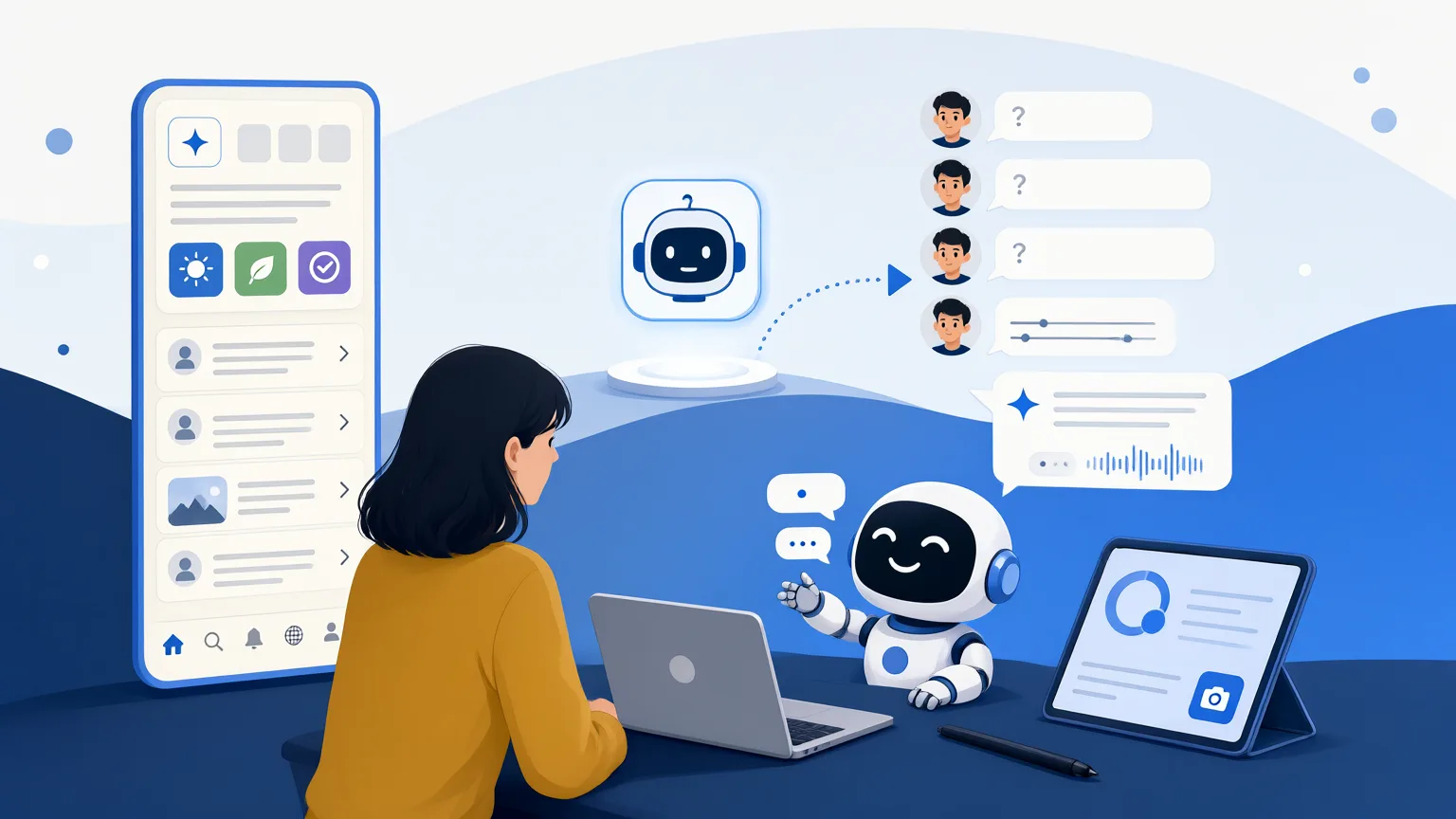
Google now answers a growing share of searches with its own generated text, but it does so through two distinct products. AI Overviews sit inside the results page you already know.
AI Mode is a separate, chat-style surface built for questions that need more than one pass. Both live in Google Search, yet they use different models and techniques, so the responses and links they surface vary significantly, as Google notes in its documentation for site owners.
AI Overviews: The Automatic Summary
AI Overviews are AI-generated summaries that appear above the traditional blue links on certain queries. Google's systems decide when to trigger one, based on whether a summary adds something beyond the standard results, and the feature reaches all users on eligible searches without any opt-in.
Each overview synthesizes information from multiple sources and includes citation cards linking to them. According to Evertune's breakdown, they lean toward informational and research-intent queries, and they often do not trigger at all.
AI Mode: The Conversational Search Experience
AI Mode is user-initiated: you open it and ask. It runs multiple related searches, applies advanced reasoning, and returns a longer, conversational answer with follow-up questions to consider and multimodal input such as images.
It suits complex comparisons and early-stage exploration, where a single query used to mean several searches. Since the systems use different source pools, a brand cited in one may be absent from the other.
AI Overviews vs AI Mode: Side-by-Side Comparison
Here is how the two experiences differ on the dimensions that shape your search strategy.
| Dimension | AI Overviews | AI Mode |
|---|---|---|
| Query type | Simpler informational queries | Complex, multi-step questions |
| Response length | Concise summary | Roughly 4x longer, with 3x more entities (Ahrefs) |
| Citation overlap | Only 14% of cited URLs overlap between the two (Ahrefs) | Same 14% overlap |
| User experience | Inline above classic results | Dedicated chat interface with follow-ups |
| Availability | Shown to all users on eligible queries | Opt-in, expanding through Labs and Search |
Query type. AI Overviews trigger on queries where a short synthesis adds value, and Google notes they often do not trigger at all. AI Mode is built for questions that previously took several searches: comparisons, reasoning, and exploration.
Response length. Ahrefs analyzed 730,000 response pairs and found AI Mode answers run about four times longer and mention roughly three times as many entities. Despite these differences, the two agree semantically about 90% of the time, reaching similar conclusions via different paths.
Citation overlap. That same study found only 13.7% of cited URLs appear in both. Being cited in an AI Overview does not guarantee an AI Mode citation, so each surface pulls from a largely separate source pool.
User experience. AI Overviews sit inline above the ten blue links, with citation cards. AI Mode is a separate chat-like interface that supports follow-up questions, so users stay in the conversation instead of clicking away.
Availability. AI Overviews appear automatically for eligible queries and all users. AI Mode remains opt-in and is still expanding through Labs and Search, which means its audience is smaller but more engaged.
Why the Differences Matter for Your Traffic and Brand Visibility
Both surfaces can mention your brand, summarize your content, and send you visitors. They do it at different rates and for different reasons, and that gap decides where your traffic comes from next quarter.
The Traffic Impact of AI Overviews
AI Overviews sit at the top of the standard results page and answer the query before anyone scrolls. If your page is the source but the summary is complete, the user has no reason to click.
- Informational queries take the biggest hit: the answer is the destination, not your site.
- Citation cards still earn clicks, but only when the summary leaves an obvious gap to fill.
- Ahrefs found that 59 percent of AI Overviews contain no brands or entities at all, so a summary can quote your content without naming you.
Google's own documentation notes AI Overviews only trigger when the system decides they add value beyond classic Search, which makes the click loss uneven across your pages.
The Brand Visibility Opportunity in AI Mode
AI Mode handles the messy part of research: comparisons, follow-up questions, ratings, and next steps. Users arrive mid-decision, which changes what a visit is worth. You get fewer clicks, but the people who click are usually looking for depth, pricing, or proof before they buy.
This is where SaaS and service businesses win. AI Mode responses carry roughly 2.5 times more brand and people entities than AI Overviews, so being named inside the answer puts you in front of buyers actively comparing options.
The catch is overlap. Ahrefs measured just 13.7 percent citation overlap between the two features across 730,000 response pairs. You can be cited in AI Overviews and completely absent from AI Mode for the same question.
Track both surfaces alongside ChatGPT, Perplexity, and Gemini, as many buyers start their journey in these chat interfaces.
How to Optimize for Both AI Overviews and AI Mode

The two features reward different content shapes, so one page rarely wins both. Google's own guidance says to apply the same foundational SEO best practices you already use for Search, since AI Overviews and AI Mode both pull from indexed pages and standard ranking signals.
Optimizing for AI Overviews
- Answer one specific question per section, with the answer in the first two sentences.
- Use a clear heading that matches how people phrase the query.
- Keep paragraphs short and add a definition, step list, or short comparison where it fits.
- Add schema markup (FAQPage, HowTo, Article) so Google can parse the page cleanly.
Optimizing for AI Mode
AI Mode responses run about 4x longer than AI Overviews and mention roughly 2.5x more entities, according to Ahrefs' study of 730,000 response pairs. Longer, sourced articles that cover related subtopics and named entities have more surface area to be cited.
- Build topic clusters: one pillar page plus supporting pages on adjacent questions.
- Cite sources and include concrete numbers, dates, and product names.
- Earn backlinks from authoritative sites to strengthen credibility signals.
- Watch which queries trigger each feature and shift effort toward the one your keywords hit.
Ahrefs also found only about 14% citation overlap between the two, so treat them as separate targets. Polar Rank's weekly check of 25 buyer questions shows whether ChatGPT and AI answers name your brand, which tells you where to invest next.
Tracking Your Brand in AI Answers: Tools and Tactics
Traditional rankings do not reveal whether AI answers name your business. Only 13.7% of citations overlap between AI Overviews and AI Mode, according to an Ahrefs study of 730,000 response pairs, so a brand visible in one can be invisible in the other. Track both directly.
Start with manual checks. Search your key buyer questions in Google and record three things: whether an AI Overview appears, whether an AI Mode response appears, and whether your brand is named or cited. Screenshot each result so you can compare later.
Then add monitoring tools that watch AI answers across Google, ChatGPT, Perplexity, and Gemini. They show where you're recommended, which competitors appear instead, and which sources the models cite. For a quick starting point, the free AI check at https://polarrank.ai/check shows whether ChatGPT recommends you.
Attribution matters as much as mentions. Connect Google Search Console, GA4, or Shopify so you can tie traffic and conversions to specific articles and the AI citations that point to them. Without that link, you can't tell which content earns customers rather than just clicks.
Set a weekly rhythm. Pick 25 buyer questions, run them every week, and log changes in brand mentions, cited URLs, and competitor presence. Weekly cadence catches shifts that monthly checks miss.
Polar Rank automates this monitoring, asking those 25 questions weekly and flagging when ChatGPT starts recommending you. It also writes a new article every day and builds backlinks, so small businesses get a done-for-you path to stronger AI visibility.
The Verdict: Which Matters More for Your Business?
The honest answer: it depends on where your buyers search, and for most businesses the answer is both.
If you rely on informational queries, AI Overviews are critical. They appear inside the standard results page for research-type searches, and they can intercept traffic before a user ever reaches your site. Ahrefs found that 59% of AI Overviews contain no brands or entities at all, so a mention is not guaranteed even when your page ranks.
If you sell complex B2B solutions or high-consideration products, AI Mode deserves the attention. It handles comparisons, follow-up questions, and longer reasoning paths, and Ahrefs measured its responses as 4x longer with 3x more entities than AI Overviews. That extra room is where a brand gets named, evaluated, and shortlisted.
For most businesses, visibility in both matters, plus AI chatbots like ChatGPT and Perplexity. Citation overlap between AI Overviews and AI Mode is only around 14%, so ranking in one does not carry you into the other.
That is a lot of surface area to cover with content, links, and weekly checks. Polar Rank runs this as a done-for-you service: a new article daily written to rank, link building from its own network and real sites, and weekly monitoring of whether ChatGPT recommends you across 25 buyer questions.
Audit your current AI visibility to determine which experience drives your buyers, then prioritize optimization efforts accordingly.
Frequently asked questions
What is the difference between AI Overviews and AI Mode?
AI Overviews are a summarized answer box that appears above traditional Google results, generated from indexed pages. AI Mode is a separate conversational search experience where you ask follow-up questions and get a chat-style response.
Overviews summarize; AI Mode converses. Both draw on Google's search index, but they serve different intents and appear in different places.
Final thoughts
AI Overviews answer the question on the page you already searched; AI Mode turns that page into a conversation you steer. Same underlying models, different jobs, and the practical difference for you is control: Overviews summarise, AI Mode lets you dig.
The next step is making sure you show up in both. Polar Rank asks 25 buyer questions weekly to track when ChatGPT starts recommending you, then writes and links articles built to rank in AI answers. You see which article brought which customer through Search Console, GA4 or Shopify, backed by a 90-day money-back guarantee if traffic does not increase.
Sources
- Google AI Mode vs AI Overviews: What to Know and the Differences (morevisibility.com)
- Are AI Mode and AI Overviews Just Different Versions of the Same Answer? (ahrefs.com)