
Google AI Overview vs AI Mode vs Gemini: Which Wins?
Google AI Overview vs AI Mode vs Gemini compared side by side: how each sources answers, who sees them, and which one to optimize for first.

Google AI Overview vs AI Mode vs Gemini is no longer a clean comparison, because all three now run on the same Gemini model family and appear inside the same search box. The difference that matters to you is not the model.
It is the surface: what it shows, which queries trigger it, where it pulls its sources from, and whether a citation is even possible. Most page-one explainers stop at defining each one, which leaves you knowing the names and still not knowing where to spend your effort.
Below is a side-by-side breakdown of sourcing, query types, and citation potential, followed by a verdict for each use case and a method for tracking brand mentions.
Key takeaways
- AI Overviews, AI Mode, and Gemini share the same models but differ in where they appear and how they source answers.
- AI Overviews are grounding-first, AI Mode adds query fan-out, and the Gemini app is generative-first from training data.
- Optimize for AI Overviews if your buyers start with a plain Google search; optimize for AI Mode if you target comparison and research queries.
- Rankings alone no longer prove visibility, you have to check whether AI answers actually name your brand.
- Consistent, well-sourced daily content plus third-party mentions is what moves all three surfaces at once.
The Short Answer: Three AI Surfaces, One Model Family
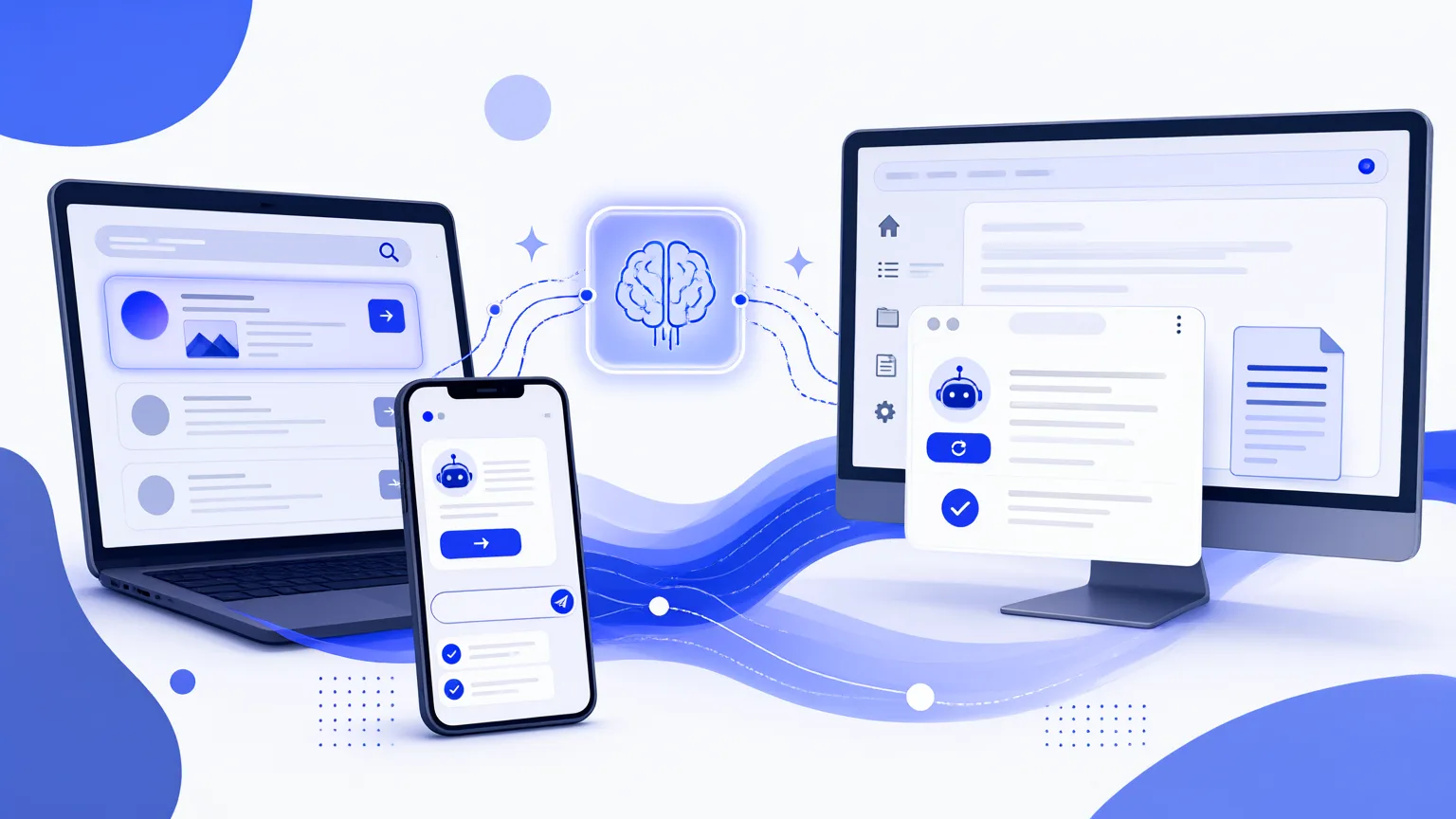
Google's three AI answers share one engine. AI Overviews, AI Mode and the Gemini app all run on the Gemini model family, and as of January 2026 Google made Gemini 3 the default model for AI Overviews globally, according to Google's Search blog.
So the difference is not the brain. It is where the answer appears and what it is allowed to use as evidence.
What each surface actually is
- AI Overviews: an AI-written summary at the top of a normal results page, grounded in the pages Google already retrieved and ranked for that query.
- AI Mode: a separate conversational tab inside Google Search. You ask follow-ups, and Google runs many parallel sub-searches behind the scenes before answering.
- Gemini: the name of the models and of a standalone assistant app outside Search. It answers mostly from training data plus whatever you paste in.
The sourcing split is the part that matters. AI Overviews and AI Mode are grounded in Google's live index, so they cite passages from pages that are retrievable and rankable. The Gemini app defaults to training data, though optional Search grounding can pull live results; without it, it relies on durable third-party coverage rather than current rankings.
Why Google built three instead of one
Each surface serves a different intent: a quick fact, an open-ended exploration, or a working session with your own files. Each also decides differently which brands get named. That is why ranking number one no longer guarantees you appear in the answer, and why the same page can be cited in an AI Overview and absent from the Gemini app.
Side-by-Side Comparison: AI Overviews vs AI Mode vs Gemini
All three run on the same Gemini model family, but they are not the same product. One is a feature on the results page, one is a destination inside Search, and one is a standalone app. That difference decides who sees your brand, and when.
Where each surface lives
- AI Overviews sit at the top of a normal Google results page, above the classic links. You do not opt in; Google shows the summary when it judges it helpful. Since January 2026, Gemini 3 is the default model behind them, and mobile users can ask a follow-up straight from an Overview and continue into AI Mode with the context carried over.
- AI Mode is a separate conversational tab inside Google Search. It is a deliberate destination: the searcher chose to go deeper, so sessions run longer and involve follow-ups.
- Gemini is its own app, outside Search entirely. People open it to draft, analyze, and work with material they bring, not to discover new brands.
How each one decides what to trust
The sourcing model is the real dividing line. AI Overviews are grounded by design, synthesizing from results Google already retrieved and ranked.
AI Mode is grounded plus query fan-out, splitting one question into parallel sub-queries across the index, the Knowledge Graph, and live data. The Gemini app is generative by default, answering mostly from training data with optional Search grounding.
| AI Overviews | AI Mode | Gemini app | |
|---|---|---|---|
| Where it lives | Results page | Search tab | Separate app |
| Sourcing | Grounded in live results | Grounded plus query fan-out | Training data first |
| Best for | Quick factual lookups | Multi-step research, comparisons | Drafting, analysis, tasks |
| Intent | Passive, huge reach | Deliberate, deeper sessions | Work, not discovery |
| Winning looks like | A citation link | A brand mention in the conversation | Presence in general model knowledge |
Grounded surfaces reward passages: you get cited when a page passage supports a claim in the answer. Generative surfaces reward entities, which depend on durable third-party coverage rather than this week's rankings. Google's own framing is that all search is AI search, sharing one crawl, one index, and one set of ranking systems.
How Each Surface Picks Its Sources (And Why It Changes Your SEO)
Grounding-first vs. generative-first
AI Overviews are grounding-first. Google runs the query, expands it, and synthesizes an answer from pages it already ranks and trusts, so classic SEO still feeds them. The catch is selection: only passages that are easy to lift and quote get used.
A page that buries its definition loses to a page with a clean, self-contained sentence near the top. Google confirmed Gemini 3 as the default model for AI Overviews in January 2026, and that upgrade did not change the sourcing logic, just the fluency of the output.
The Gemini app works the other way. It is generative by default, answering mostly from training data and prior context, which means brand mentions earned months ago can still surface today. Grounded surfaces reward passages; generative ones reward entities.
What query fan-out means for small sites
AI Mode is grounding plus query fan-out. One question becomes many parallel sub-queries, run across the index, Knowledge Graph and real-time data.
That is an opening for smaller sites: you can be cited for a sub-question even if you never rank for the head term. "Best CRM for a two-person agency" is winnable when "best CRM" is not.
What to do with that:
- Write short, factual, self-contained chunks with clear entities, so any surface can lift a sentence without losing meaning.
- Keep names, product terms and descriptions consistent across your site, profiles and third-party mentions. All three surfaces cross-check entities, so agreement matters more than any single page.
- Track which pages actually earn citations. Polar Rank connects Search Console, GA4 or Shopify so you can see which article brought which customer, rather than guessing from rankings alone.
For a look at how the three surfaces differ in sourcing, this breakdown of Gemini vs. AI Overviews vs. AI Mode is a useful reference.
Which One Should You Optimize For First? Verdict by Use Case
The right first target depends on where your buyers actually start, not on which surface gets the most press. Match your priority to the query pattern that already brings you revenue.
Verdict for local and small businesses
Prioritize AI Overviews. Most local buyers type a plain Google search and never open a separate tab, so the summary at the top of the results page is the surface that decides whether they see you.
Because AI Overviews synthesize from pages Google already retrieved and ranked, the work is unglamorous: rank, answer cleanly, and keep your Google Business Profile and service pages consistent. If you are comparing providers to help with that, our breakdown of the best SEO services for small businesses covers what to look for.
Verdict for SaaS and B2B
Prioritize AI Mode. Its query fan-out splits a question like "best help desk for a five-person team" into parallel sub-queries, so you get surfaced in sub-questions your competitors never wrote for. Build pages around those narrow comparisons and "best X for Y" framings.
Verdict for brand and reputation
Prioritize the Gemini app and other assistants. There, being mentioned depends on whether the model already learned your brand from durable third-party coverage, not on this week's rankings.
If you can only do one thing, publish one well-structured, fact-dense article per day aimed at real buyer questions. It feeds all three surfaces at once. Do not treat them as separate strategies: the same entity clarity, citations, and third-party mentions move all three.
How to Track Whether AI Answers Mention Your Brand

Traditional rank tracking does not show whether your brand is cited inside an AI Overview or AI Mode response. You must verify the AI output directly.
The 25-question weekly check
Monitor visibility by auditing AI responses against specific buyer questions.
- Compile a list of 20 to 25 specific, real-world buyer questions relevant to your niche.
- On a regular schedule, pose these questions across multiple platforms: Google Search (to test AI Overviews), Gemini, ChatGPT, and Perplexity.
- Log which of these AI surfaces name or reference your brand in its answer.
Tracking the shift from "not mentioned" to "recommended" provides a leading indicator of AI-driven traffic.
Connecting AI mentions to actual revenue
Connecting mentions to business outcomes is the next step.
- Integrate your analytics platforms. Connect Search Console, GA4, or your Shopify backend to your marketing efforts.
- This connection allows you to attribute specific customer journeys to the content that was cited in an AI response, moving beyond mere guesswork.
This rigorous workflow is precisely what is automated by Polar Rank. We execute this process by asking 25 buyer questions weekly across ChatGPT, Perplexity, and Gemini, simultaneously writing a new ranking-focused article daily, and building quality links from our network and real sites. We back this commitment with a 90-day money-back guarantee if traffic does not increase.
Common Misconceptions and What to Do Next
Four myths worth dropping
- Myth: AI Overviews killed organic traffic. Reality: they reshaped it. Pages cited inside the Overview still collect clicks from people who want the detail; pages that lose the citation lose the click. Your job is to be the source, not to mourn the layout.
- Myth: Gemini and AI Mode are the same thing. Reality: Gemini is both a model family and a standalone app, while AI Mode is a conversational tab inside Google Search. One answers largely from training data, the other runs grounded, parallel sub-queries against the live index.
- Myth: you need a huge domain to get cited. Reality: narrow, well-sourced answers get pulled in constantly. A single page that cleanly supports one claim in a generated answer can out-earn a broad hub that says nothing specific.
- Myth: blocking Google-Extended protects you. Reality: it opts you out of future Gemini training only. AI Overviews and AI Mode run on Googlebot, so you remove yourself from generative surfaces while changing nothing about whether you get cited in Search.
A 90-day starting plan
- Pick the one surface that matches your buyer's first question, an Overview for "what is," AI Mode for "compare," Gemini for "draft this."
- Publish consistently against that question for 90 days instead of spreading thin across all three.
- Measure brand mentions in AI answers, not just rankings. Polar Rank asks 25 buyer questions weekly to show when ChatGPT starts recommending you, and connects Search Console, GA4 or Shopify so you see which article brought which customer.
If you are not sure where you currently stand, run the free AI visibility check before you commit to a surface.
Frequently asked questions
undefined
undefined
Final thoughts
AI Overviews, AI Mode and Gemini are not rivals so much as layers: AI Overviews summarize, AI Mode lets you ask follow-ups, and Gemini does the reasoning. Which one wins depends on the question you are asking, not on the tool. What matters for your business is whether any of them mention you when a buyer asks.
The next step is checking that directly. Polar Rank asks 25 buyer questions every week to see when ChatGPT starts recommending you, and connects Search Console, GA4 or Shopify so you can see which article brought which customer. Start there, then write for the answers you are missing.